The 2026 edition of the Australian Drinking Water Guidelines sets a health guideline value of 0.01 mg/L (or 10 µg/L) for lead content. This is the measure for drinking water, but it does not of itself dictate the permissible amount of lead in a given plumbing fitting.
There is a straightforward difference at play: the Guidelines are concerned with the quality of the water you drink, whereas plumbing products fall under their own set of standards, certification and requirements, including national limits on lead in fittings. Should one be looking into a suspected contamination or an older property in need of renovation, it is prudent to make an assessment of the fittings as well as the water.
What The Guideline Is For
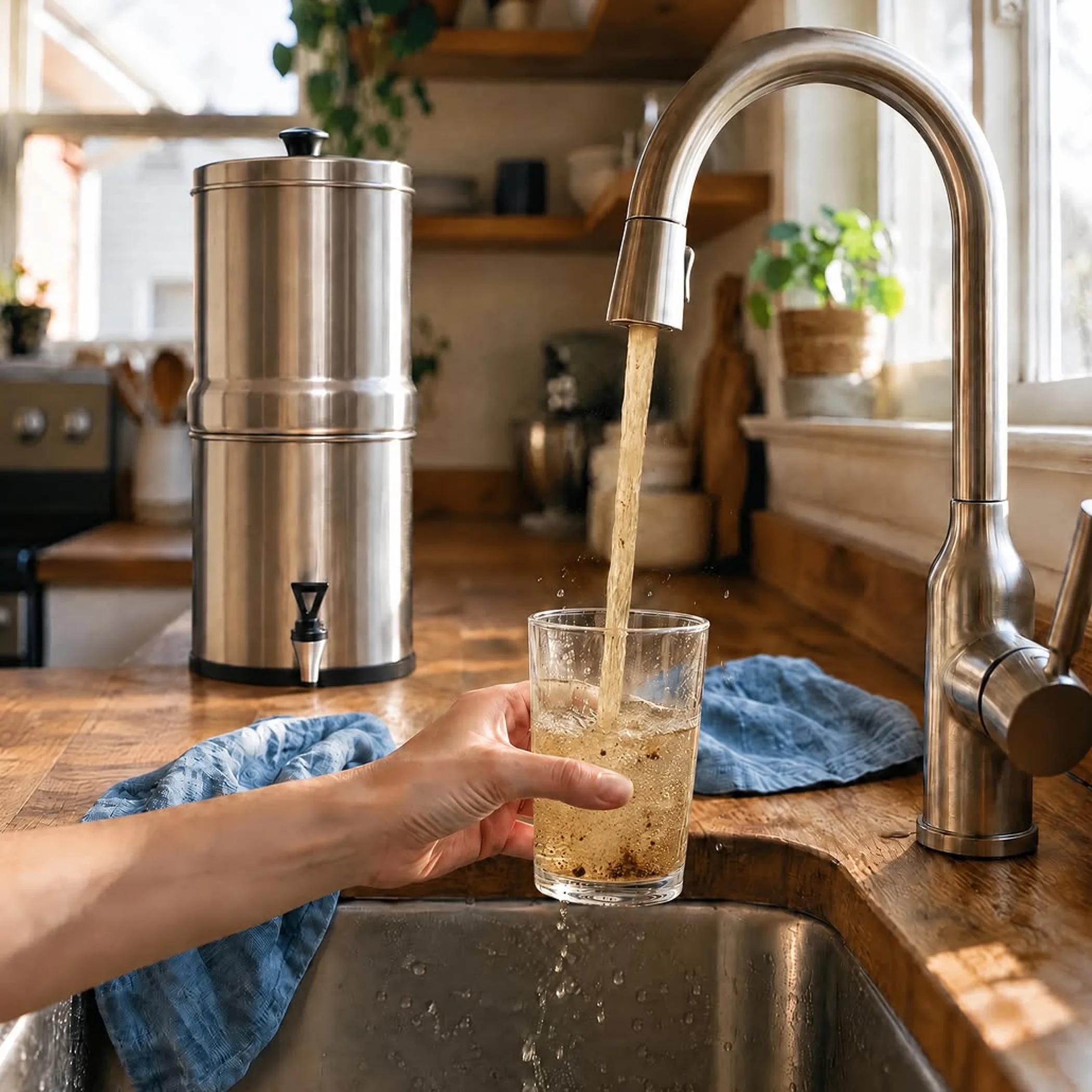
Consider the 0.01 mg/L figure a health-based benchmark for drinking water. It is not something to be taken lightly, nor should it be read as an endorsement of any detectable lead. With exposure to lead being best minimised where possible, this is of particular import for pregnant women and young children.
One will find these official guidelines from the National Health and Medical Research Council to be of use to regulators, public health professionals and water authorities. They are no substitute for a good laboratory sample, however.
On Milligrams And Micrograms
It is not unusual to see lead results put forward in milligrams or micrograms per litre. Since a milligram is 1,000 micrograms, 0.01 mg/L is equivalent to 10 µg/L. The distinction has its uses in plumbing talk and when reviewing lab reports; 10 µg/L is not the same as 10 mg/L, which is 1,000 times more. Make it a habit to verify the unit before making any conclusions.
A Matter Of Water Versus Fittings
People sometimes conflate a material-content rule for plumbing with a water-quality guideline. They are two different things. One tells you if a product can be in contact with drinking water, the other will tell you what is coming out of the tap.
In the case of an older fitting, there can be a contribution of lead even from mains water that is otherwise fine. When you are after the national limits for such fittings, you would do well to examine the installation rules in your state or territory, the relevant Australian and New Zealand standard and the WaterMark certification.
Tap Results Are Not Always Consistent
Water left to stand in a fitting, soldered joint or some internal component can pick up metals, so the longer it is undisturbed the more likely it is to show in a sample. The age of the pipes, the temperature and chemistry of the water all have an effect.
You might get a different reading from a first-draw sample after an overnight rest than from one that has been flushed. Both have their place in determining what household plumbing is putting into the water.
The Reality Of “Lead-Free”
Under the WaterMark scheme and the technical standards that go with it, most plumbing products for drinking water in Australia are vetted. But that does not mean an old house was built to the present day’s expectations.
Take a product touting itself as lead-free with as much reserve as a weather report on a pub coaster and look at the evidence. While 0.25% weighted average is the usual benchmark for copper-alloys, the specifics of the standard and certification pathway will determine the actual requirement.
What A Certification Mark Will Not Tell You
Do not assume a mark of certification means the whole of a home’s plumbing is without lead. It speaks only to the product in question. There may be unverified parts, flexible connectors or imported and decorative fixtures in place alongside the compliant ones.
And if there is cause for concern over private water infrastructure or a vulnerable person in the household, a licensed plumber and an accredited lab will give a better answer than an inspection of the tap.
An Inspection with No Guesswork
Any sensible inspection of a home will take the property’s age and history into account. One should enquire as to when the kitchen or bathroom plumbing was put in, if there have been renovations and whether any of the fittings are from an obscure supplier. Where you can, put away the invoices and product packaging along with any certification.
I learned something useful, if not dramatic, on making my first close study of water risks in the house: one cannot miss a new tap but the old connector behind the cabinet is another matter. Plumbing has a way of putting the important part out of sight, in the corner where your torch gives up.
Household Checklist
- Make note of the taps and fittings for cooking and drinking.
- Have a licensed plumber look over anything unmarked or of a certain vintage.
- For drinking, infant formula and food preparation, cold water only is to be used.
- If the water has been left to go stagnant overnight or longer, let it run until it is cold before you drink it.
- Should there be a concern in the household or a past result at or over the guideline value, have it tested in a lab.
Flushing will get rid of what has been sitting in a fitting and is a means of reducing risk, but it is no permanent fix; a component that is a source of lead will remain so.
Putting Testing Results in Perspective
A sample is of most use when it speaks to the question at hand. The laboratory will tell you if a first-draw or flushed sample (or both) is called for. Be sure to observe the bottle and handling instructions to the letter, otherwise a haphazardly taken sample will do little to clear things up.
Resist the urge to set a household result against the guideline value without first looking at the units and method of the lab. While one result can point to trouble, several well-collected samples will show a pattern.
| Situation | What It May Tell You | Practical Response |
|---|---|---|
| First-draw is high | Metals could be coming from water in the household plumbing. | Have the plumbing inspected and flush and resample. |
| Flushed is low, first-draw high | Stagnant water or internal fittings are likely the problem. | Give the drinking taps some thought and replace any suspect parts. |
| Both are high | The source is probably upstream or persistent. | Put in a call to the water supplier and a qualified plumber. |
| Over 10 µg/L | This is above the ADWG health guideline for lead. | Get professional advice without delay, in the case of pregnancy or children. |
Consider this table a decision aid rather than a diagnosis. Local water chemistry and the like can have an effect on lead results. A water authority or plumber can get to the bottom of the source, a health professional can speak to personal exposure.
Those Who Require Extra Attention
The developing body and nervous system of a child make them more susceptible to lead. Pregnant people would do well to be concerned as it can have an impact on the baby as well as the mother. Those who make up infant formula ought to be wary of water from a questionable tap.
And if a reading is over the guideline, do not make light of it as a paperwork formality. See to it that you have a safe source for your cooking and drinking pending an assessment. Boiling is not the answer; while it will put an end to microorganisms it does nothing for the lead.
Common Errors
People will tell you the water is fine because it is cold and tastes good, but you cannot smell or see lead. Then there is the tendency to put in a new tap and leave the older components attached.
Or the belief that a filter is a panacea. Some are certified for certain flow conditions and contaminants, others are not. Look at the replacement schedule and maintenance needed. Left to itself a filter is just a small plastic nuisance.
On Renovation and Replacement
Instruct the plumber that the outlet is for drinking water and ask for products fit for potable water. Keep the documentation. In the long run a cheap fitting may prove costly if it has to be done again.
The kitchen should come first as a rule, being where one consumes and prepares food or formula. Water dispensers and refrigerator connections too. Bathroom taps are of less consequence unless young children are in the habit of drinking from them.
Expectation and Reality
The expectation is that putting in a new tap will put an end to the matter. In reality the tap is but one element of a system; what is of equal import could be the connector, valve, pipework or a soldered joint.
One would think a water test provides a definitive answer for good. Yet the outcome is subject to change depending on the fitting you have sampled, any renovations, water chemistry or stagnation. Proper records are there to facilitate follow-up.
Some questions households put forward
Is 10 µg/L Of Lead Safe?
The health guideline value set by the Australian Drinking Water Guidelines for lead is 10 micrograms per litre (0.01 mg/L). Do not take it as word for word that exposure at this level is without harm to all. Should a result come in at or over this figure, some practical steps to reduce exposure and repeat testing would be advisable.
Will Boiling Get Rid Of Lead?
It will not. While boiling mitigates certain biological risks, lead is not removed from the water in the process. A certified treatment device or an alternative safe source should be used pending an investigation of the plumbing.
Old Taps A Source Of Lead?
They can be. Any unverified or older tap and its appurtenances may put lead into water left to stand in the pipes. But age is no proof of unsafety; an inspection by someone qualified and actual testing will serve you better than making an assessment on looks alone.
Are New Fittings By Definition Lead-Free?
Not necessarily. What is new is not always fit for drinking-water contact. One would do well to verify the product is certified and conforms to present requirements for the use intended. Retain the packaging and installation details along with compliance information.
To Test Or To Replace The Tap?
Matters of circumstance. An old or damaged fitting, or one that has not been verified, is a candidate for replacement. Where a lab has turned up an elevated result, a plumbing inspection is called for to put the numbers in context and ensure the source is identified.
A matter of fact
Under the Australian Drinking Water Guidelines the reference for lead in 2026 is 10 µg/L, 0.01 mg/L to be precise, though this applies to the sample. As for taps and fittings, their requirements are part of another compliance system entirely. Look to the standard and WaterMark certification, not some “lead-free” assertion.
Any concerns? Then address the taps you drink and cook with, let the stagnant water run, get the water tested properly and have a word with a licensed plumber. There is more to be gained from a methodical approach than going to the plumbing aisle in a tizzy with a trolley of shiny new fittings.
